Best Time of Year for a Jet Ski Engine Swap in Atlantic City
Late fall through early spring is the best window for a jet ski engine swap in Atlantic City. The machine sits unused anyway, shop lead times run shorter, and the new engine is ready before the first warm weekend.
Published
Part of our Jet Ski Engine Swap service.
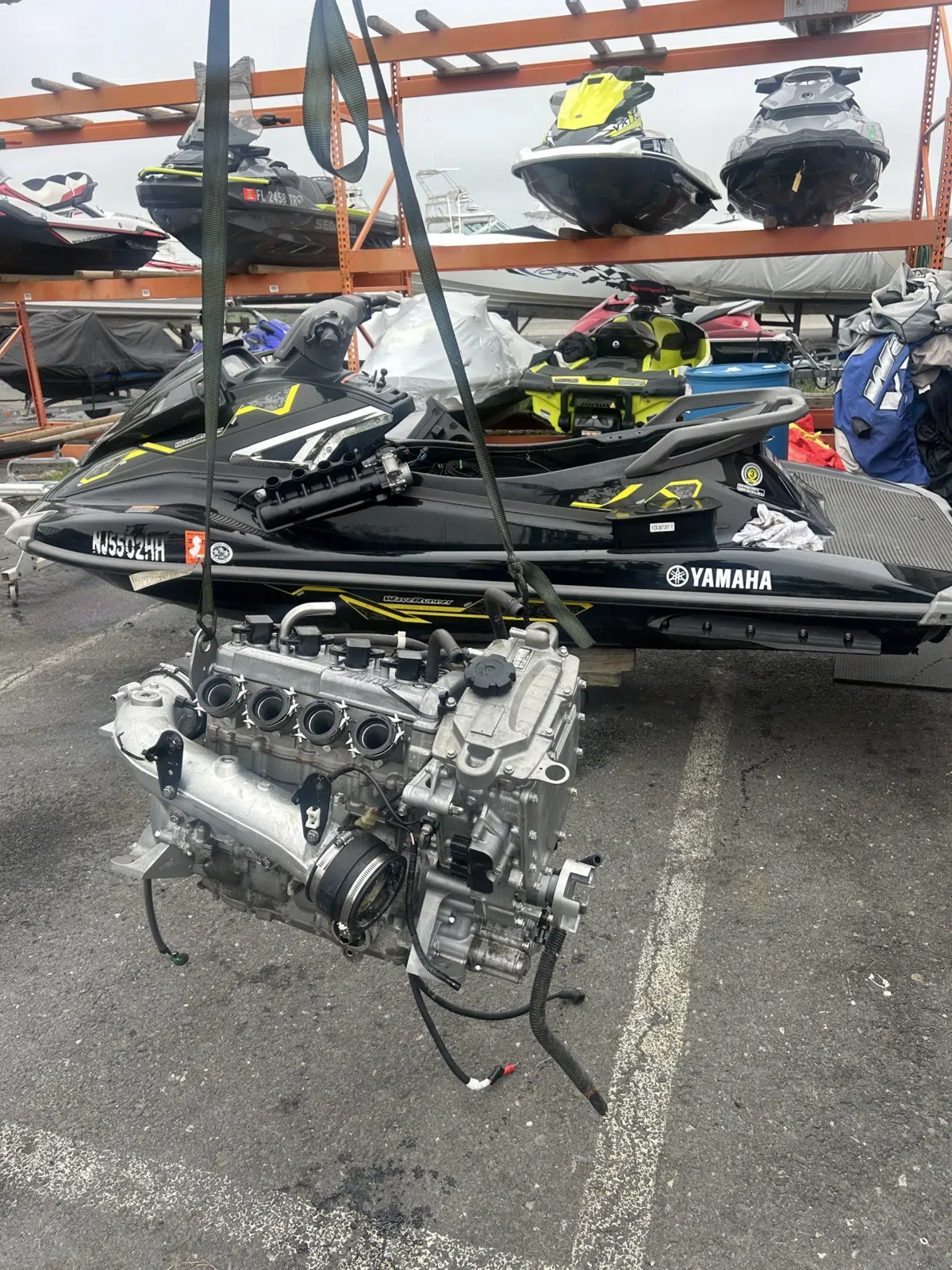
Why Off-Season Is the Best Window for an Engine Swap
An engine swap is not a weekend job. Between sourcing a replacement engine, pulling the old one, swapping over accessories, and breaking in the new unit, the machine is out of service for weeks. Doing that work between late fall and early spring means you are not losing riding days you actually want. This guide comes from JetPro Powersport in Atlantic City.
It also lines up with how most Atlantic City owners use their machines anyway. The riding season along Absecon Inlet and the back bays runs roughly from May into early fall. A ski sitting on a trailer from November through March is not giving up anything. Swapping the engine in January or February turns dead storage time into project time.
There is a practical bonus too: once the swap is done, you get a full spring startup and shakedown before opening day, instead of troubleshooting a fresh engine on the water in June.
What Happens If You Wait Until Summer
Summer is when engine swap requests spike, and it is the hardest time to get one done fast. The machine that needs a new engine is usually the one that just quit, so the owner wants it back yesterday, right in the middle of the season everyone waits all winter for.
The tradeoffs are real. Parts sourcing can take longer when suppliers are busy. The shop calendar fills with repairs for riders who are actively using their machines. And every week the ski sits on the trailer is a week of Atlantic City summer gone. Ventnor and Margate owners who bring a swap in during July often do not see the machine until the season is mostly over.
Sometimes a summer swap is unavoidable, and we handle those. But if you already know your engine is tired, such as low compression on one cylinder or a seized unit from last season, booking the work for the off-season protects your summer.
Signs Your Engine Is Done Rather Than Repairable
Timing the swap starts with knowing you need one. Some failures are repair-friendly. A top-end rebuild on a two-stroke, a gasket job, or a fuel system cleanup can all be reasonable fixes on a healthy block.
A swap makes more sense when the core is gone. Classic cases include a seized crankcase from water intrusion, a cracked block from freezing, catastrophic rod bearing failure that scored the cylinder walls, or corrosion so deep that machining cannot save the case. On older skis, the math also matters: if the hull, pump, and electrical are solid but the engine is scrap, a replacement engine is often smarter than a full teardown of a worn core.
If you are not sure which category your machine falls into, a compression test and inspection at JetPro Powersport will tell you. Getting that answer in October, not June, gives you room to plan.
How Far Ahead to Book a Swap in Atlantic City
Lead time on an engine swap has two parts: getting the engine and getting a bay slot. Replacement engines, whether remanufactured units or good used cores, are not always on the shelf. Matching the right engine to your exact model and year can take a few weeks on its own.
Booking in October or November means the sourcing clock runs during the months nobody is asking for rides back. A swap started in late winter usually has the engine on hand and the machine apart with weeks to spare before spring. A swap booked in May competes with every other spring startup and breakdown in the shop queue.
The practical rule for Atlantic City and the surrounding shore towns: call by late fall, even if you plan to drop the ski in January. Early booking lets us order the correct engine and hold the calendar slot that fits your schedule.
Timing a Swap Around Winterization
If your ski needs an engine swap, the usual winterization routine changes. Fogging the cylinders and stabilizing the fuel on an engine that is coming out anyway is wasted effort. It makes sense to sequence the work instead.
One option is to do the swap first, then winterize the new engine properly so it sits clean until spring. The other is to drain and protect the machine minimally, pull the engine over the winter, and run the first startup and break-in during a spring visit. Either path works. What matters is that someone plans the order, so you are not paying for prep on a dead engine or leaving a fresh one unprotected.
This is exactly the kind of sequencing we map out when Atlantic City owners call in the fall with a known-dead engine. Tell us the model and the failure, and we will lay out the calendar from pull to first ride.
Getting the Swapped Engine Ready for the Season
An engine swap that finishes in March should not go straight to the ramp in April. A new engine needs a proper break-in and a shakedown, and spring is the time to do it.
At JetPro Powersport, that means checking jet pump and impeller condition while the machine is already in the shop, verifying battery and electrical connections that feed the new engine, and running the ski through startup diagnostics before it ever touches salt water. A fresh engine paired with a worn impeller or a tired battery just moves the breakdown to a different part of the machine.
Plan on a break-in period with varied throttle rather than wide-open runs, and an early-season fluid check. When the swap is timed for the off-season, all of that fits comfortably before Memorial Day, and the first weekend on the water in Atlantic City is a celebration, not a tow-in.
Ready to move forward? See our Jet Ski Engine Swap service
Written by the JetPro Powersport team.
Best Time of Year for a Jet Ski Engine Swap in Atlantic City FAQs
Can a jet ski engine swap be done during the summer season?
Yes, but expect a longer wait. Summer is the busiest stretch for any PWC shop, and parts sourcing can run slower when suppliers are loaded. The machine will also be out of service during prime riding weeks. If the engine failure is already known, booking for late fall or winter keeps the swap off your summer calendar.
How long does a jet ski engine swap take?
It depends on the model, the type of replacement engine, and how quickly the correct unit can be sourced. Pulling and replacing the engine is a multi-week job on its own, and sourcing can add more time. Call JetPro Powersport at (609) 507-0129 with your model and we will give you a realistic timeline for your machine.
Is it worth swapping the engine on an older jet ski?
Often, yes, if the rest of the machine is sound. A ski with a good hull, healthy jet pump, and working electrical is a strong candidate for a replacement engine, especially if the failure was catastrophic. A compression test and inspection will show whether the engine is the only problem or whether the whole machine is past its useful life.
Should I winterize a jet ski that needs a new engine?
Not in the usual way. Fogging and stabilizing fuel on an engine that is coming out is wasted work. The better move is to sequence the job: pull the engine over the winter, then winterize the new unit or run break-in at spring startup. Let the shop know the engine is coming out and the plan changes accordingly.
Have a question we didn't cover? Ask us directly